Fork & Glass: An Evening at Windridge Vineyards
By the time Bri and I pulled into Windridge Vineyards, the work week was finally beginning to fade into the background. After navigating the usual Friday traffic and downing a late afternoon cup of coffee, we were ready for a relaxing evening of good wine, beautiful scenery, and good company. Walking up to the vineyard, the atmosphere seemed lively yet relaxed.
Before dinner, we ordered glasses of Windridge’s Sparkling Portrayal and began to take in the late day sun. Bri and I settled into a pair of wooden lounge chairs overlooking the vines while live music drifted through the property. Groups of friends laughed over glasses of wine, couples leaned back in Adirondack chairs, and the low hum of conversation blended naturally with the music. It was the kind of evening that reminds you why vineyard events work so well in Maryland’s wine country. The setting encourages people to slow down, lean in and be present. Nobody seemed rushed. Nobody seemed distracted. Even before the dinner event, the night already felt successful.
At six o’clock, guests began making their way inside for the Fork and Glass Dinner, an event designed to introduce Windridge’s new 2025 Albariño. As we entered, we were greeted almost immediately by Robert, one of the owners of the vineyard. Warm and approachable, he personally walked us downstairs to the tank room where the dinner was being held. That gesture set the tone for the entire evening. Despite the elegance of the setup, the event never felt overly formal or stiff. It was welcoming and personal.
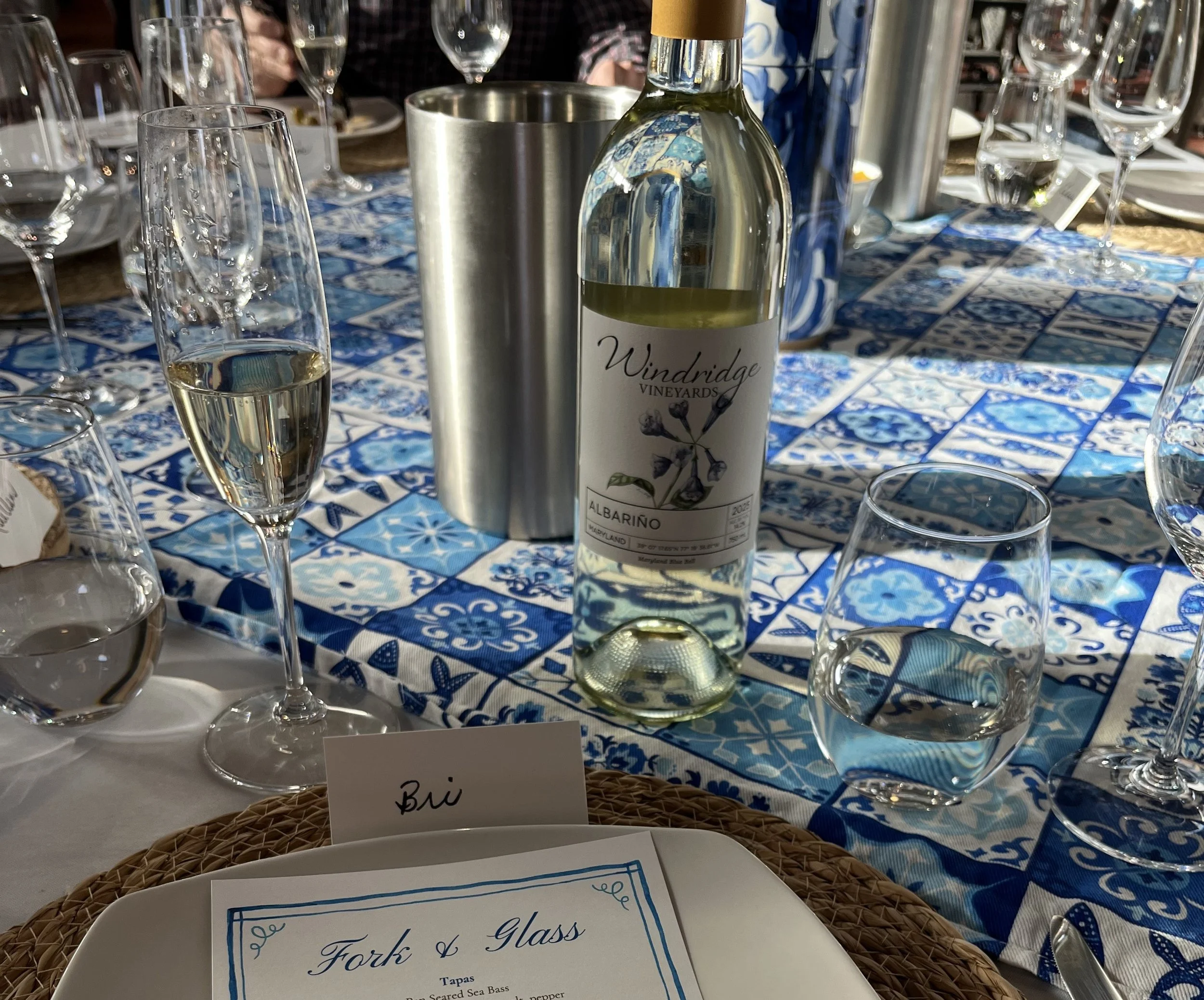
First Pours
The tank room itself created a fascinating contrast between industrial winemaking and fine dining. Massive silver tanks lined gray walls beneath soft dropped lighting, while tables draped in white tablecloths accented by floral center pieces gave the room warmth and sophistication. The barn red floor beneath the tables added just enough energy and color to keep the space from feeling too sterile. Bri and I, admittedly being wine nerds, immediately wandered over to admire the tanks and control systems before settling into conversation with the guests seated around us.
The dinner was intentionally intimate: four tables of eight guests each. The smaller format transformed the evening from a typical event into something much more conversational. People quickly became comfortable with one another. Stories flowed almost as easily as the wine, and by the midpoint of the evening it felt less like a formal pairing dinner and more like a gathering of friends. Amy and the rest of the team kept everything moving seamlessly while still allowing the evening to breathe naturally.
Guests were welcomed with a complimentary pour of Windridge’s sparkling Portrayal, a bright and refreshing opening wine that carried crisp citrus and orchard fruit notes with lively acidity. This was lucky as I was going to order another one before dinner, but Bri said we were out of time and needed to head inside. The Portrayal was the overture before the main event of the night: the 2025 Albariño.
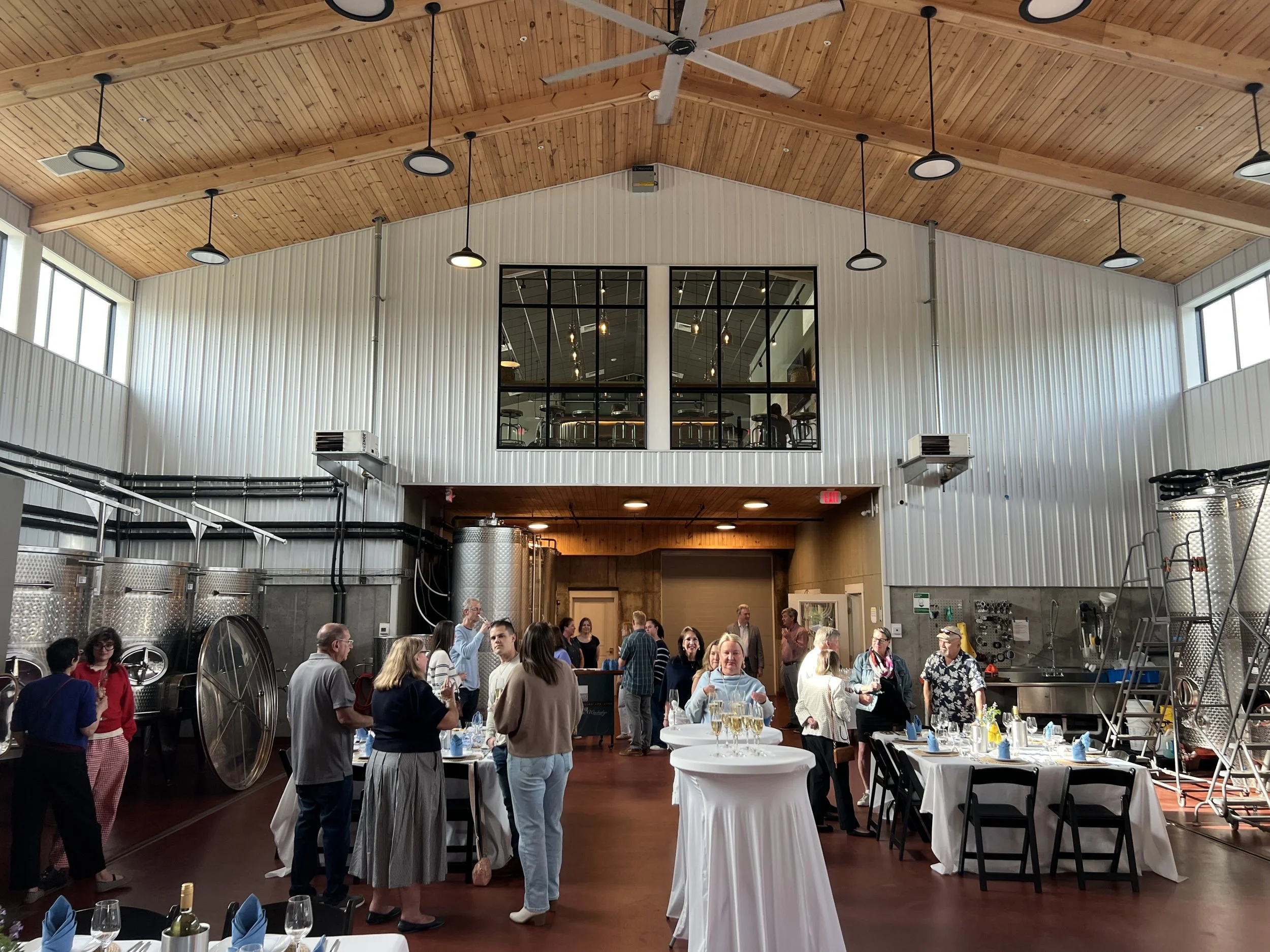
Before the Dinner
Robert gave a brief introduction about the vineyard, the dinner, and the philosophy behind the wine. That philosophy is deeply rooted in Windridge’s identity. Though the first vines were planted in 2011, the family has been farming Montgomery County land since 1959. The winery remains family owned, operated by four brothers who approach wine through both an agricultural and conservationist lens. Their philosophy emphasizes terroir, sustainability, and stewardship of the land. Drawing on decades of farming experience ranging from row crops to beekeeping, Windridge takes a holistic approach to viticulture with the belief that great wine begins with responsible farming. Situated on Maryland’s Piedmont Plateau, the vineyard sites were carefully selected for their geology and microclimates.
The 2025 Albariño was vibrant, aromatic, and beautifully layered. Notes of white flowers lifted from the glass first, followed by peach, pear, apple, lemon peel, orange zest, and tangerine. There was also a subtle minerality running underneath the fruit that gave the wine structure and freshness. The finish lingered pleasantly with more citrus and stone fruit tones.
The production methods added complexity to the wine without sacrificing freshness. Made from 100% hand-harvested Albariño, 75% of the wine was cold fermented in stainless steel to preserve brightness and aromatics, while 25% was fermented in French oak barrels and aged on lees for four months with regular bâtonnage. That combination gave the wine texture and weight while maintaining its refreshing character. At 14.2% ABV, it carried richness without ever feeling heavy.
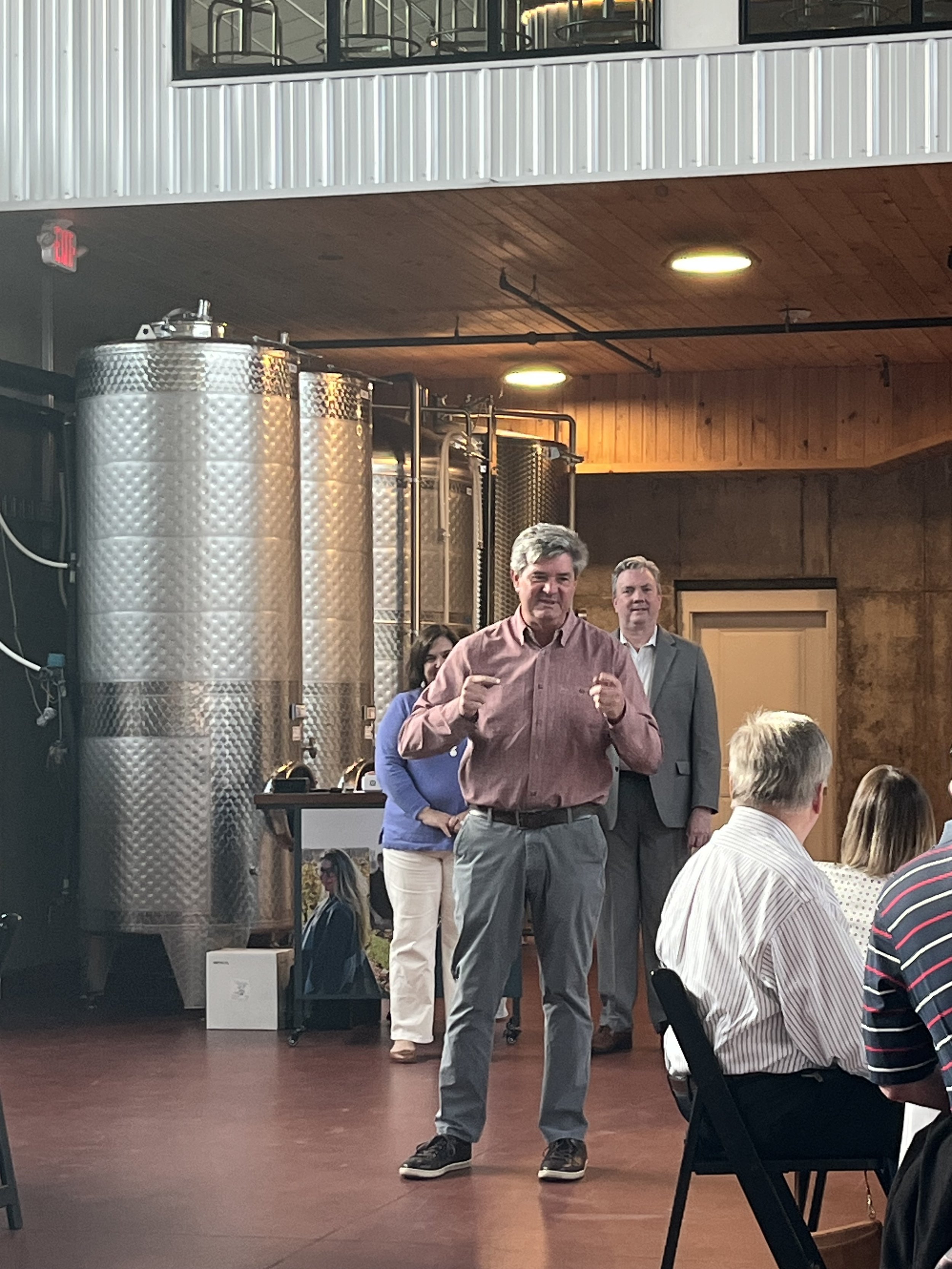
Robert giving some welcoming words
The meal began with a few tapas courses which immediately demonstrated why Albariño remains one of the great food wines. A pan-seared sea bass dressed simply with Spanish olive oil, lemon, sea salt, and pepper highlighted the wine’s citrus and mineral qualities beautifully. The fish was delicate and clean, while the Albariño amplified its freshness.
The patatas bravas brought something entirely different to the pairing. The spicy paprika sauce interacted with the wine’s acidity in a way that refreshed the palate between bites, allowing the dish’s smoky and savory elements to shine without becoming overwhelming.
Pan con tomate, with grilled rustic bread topped by fresh chopped tomatoes, olive oil, and sea salt, felt deceptively simple but incredibly satisfying. The brightness of the tomatoes mirrored the wine’s citrus profile while creating a planned umami dissonance, creating one of the more understated yet memorable pairings of the evening.
Then came the chorizo, rich and deeply seasoned, bringing savory spice into the mix. Here the Albariño showed another side of itself. The slight creaminess from lees aging softened the spice while the acidity kept everything balanced. It was a reminder that this wine had more versatility than expected.
Finally, the main course, Paella Valencia, fully tied the evening together. Loaded with shrimp, chicken, vegetables, and saffron rice, the dish carried layers of richness alongside comforting earthy flavors. The Albariño cut through the dish effortlessly, highlighting the sweetness of the shrimp and the herbaceous character of the vegies while still standing up to the saffron and roasted elements of the rice.
One of the best decisions of the evening was the style of service. Rather than carefully measured pours appearing only at designated moments, guests were encouraged to serve themselves the Albariño throughout dinner. That looser structure added a casual elegance to the experience. People could revisit pairings, compare dishes with different amounts of wine, or simply enjoy another glass while chatting. It allowed guests to engage with the wine naturally instead of academically, and that freedom elevated the atmosphere considerably.
By dessert, the room had completely relaxed into itself. Conversations bounced from travel stories to wine regions to everyday life. Laughter seemed to echo off the tanks. The final pairing featured a Basque cheesecake alongside Windridge’s 2019 Old Line, a fortified Port-style dessert wine made from 50% Cabernet Franc and 50% Petit Verdot.
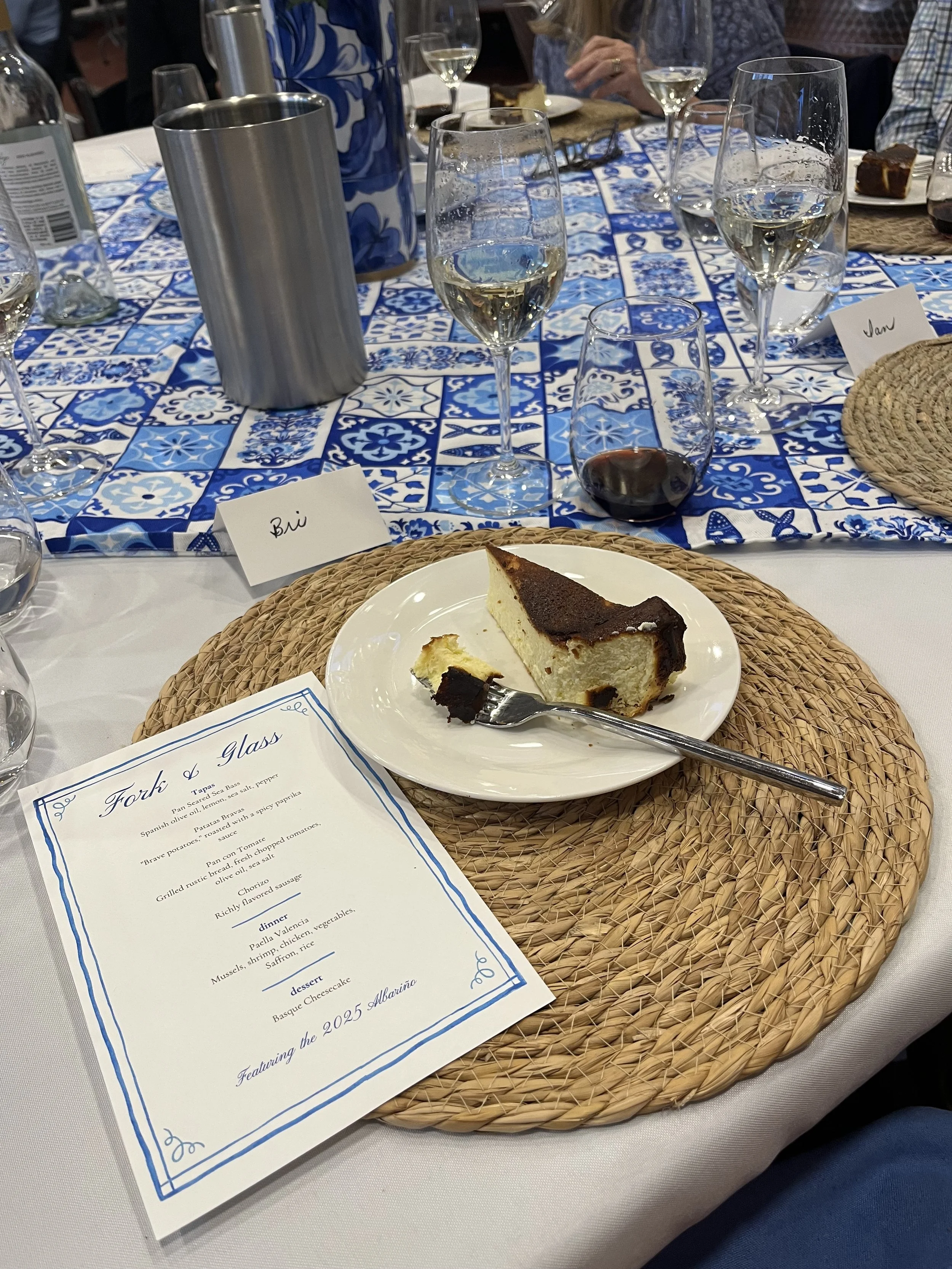
Basque Cheesecake
The Old Line was rich and warming with aromas of chocolate, dried pomegranate, and plum. On the palate, flavors of cherry, caramel and licorice unfolded into a long French vanilla finish shaped by three years of aging in French oak barrels. Extended maceration and fortification with grape spirits gave the wine depth and structure, while the creamy cheesecake softened its intensity beautifully. Together, the pairing closed the evening with richness and comfort.
As the dinner wound down, nobody seemed eager to leave. Guests lingered at tables finishing conversations and savoring final pours. After a night filled with good food, expressive wine, live music, and genuinely warm hospitality, Bri and I eventually said our goodbyes and made our way back upstairs.
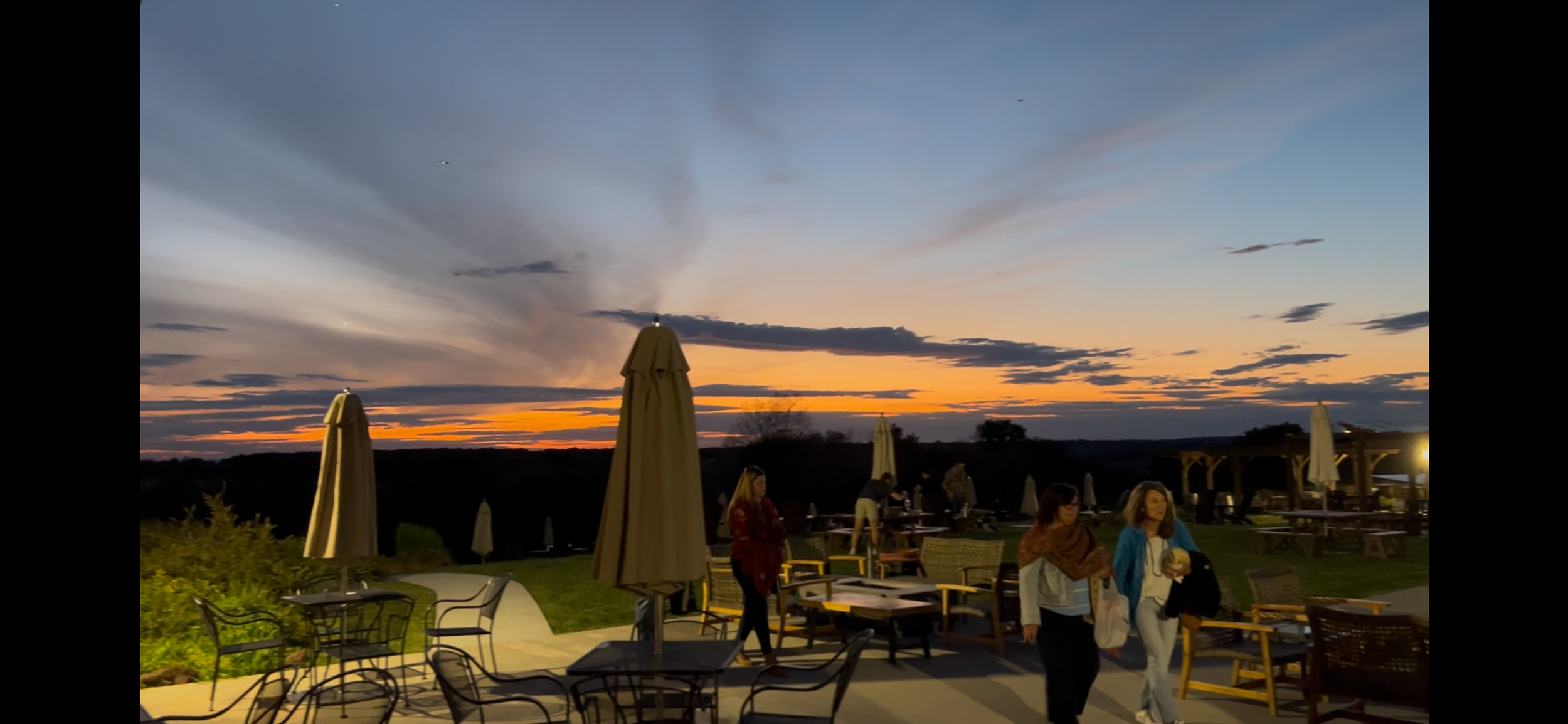
A little after Sunset
Walking back out into the night air, the vineyard had gone quiet except for the distant sounds of lingering conversation and a few people admiring the late spring sunset. The vineyard glowed in the soft gold of the evening, with rows of vines stretching beneath a colorful fading sky. The week that had felt so heavy on the drive over suddenly seemed much farther away. The Fork and Glass Dinner had accomplished something beyond introducing a new wine release. It created the rare kind of evening where exceptional wine, thoughtful food, and relaxed company all aligned naturally.
And somewhere between the first sip of sparkling and the final taste of Old Line at sunset, Windridge Vineyards reminded everyone in that room exactly why Maryland wine is what it is. The evening was more than a wine dinner; it was a celebration of how far the region has come, and a glimpse of just how bright its future can be.
Special Thanks To: Amy, Robert, Chef Jeff and the rest of the Windridge Staff